This review contains heavy spoilers.
There is no difference between private life and public life.
My life, is my life, is the Truman show. It’s a noble life.
It’s all true, it’s all real. Nothing here is fake. It’s merely controlled.
— From the cast interviews in the film’s opening sequence
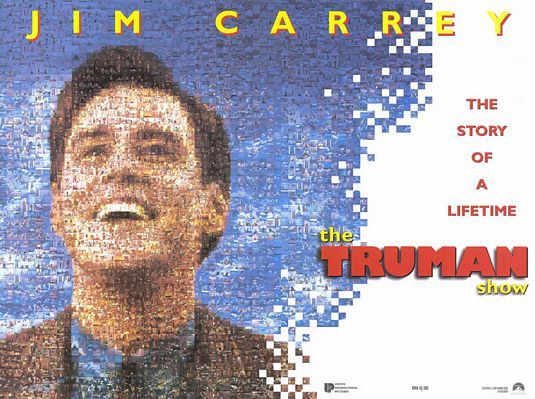
Released in 1998, The Truman Show tells the story of Truman, an ordinary man living in the fictional world of Seahaven. More than two decades after its release, this post takes another look at the deeper message the film tries to deliver.
The plot, in short, goes like this.
Truman is an ordinary thirty-something office worker, born and raised in Seahaven. The catch is that the city itself is a giant television set. His friends, his wife, his parents, every other person in the city is a hired actor playing a supporting role in a documentary called The Truman Show, with Truman as its lead. One day, sensing that something is off about Seahaven, Truman decides to escape, pulled by the memory of his first love, Sylvia. The show’s creator, Christof, fights to keep the production alive and tries to stop him. Truman, in the end, makes it out, walking off in search of freedom and love.
The theme of The Truman Show is widely understood. It is the story of a man who leaves a comfortable but fabricated world to find a real one and, with it, his freedom. The idea that an honest, harder life is preferable to a counterfeit happiness is by now familiar to most viewers. The Matrix, released a few years later, shares much of the same message. So let me push the question one step further. Why should we choose a difficult freedom over a comfortable lie? What, exactly, is wrong with being content inside Seahaven, or inside the Matrix? I want to look for an answer in The Truman Show itself.
The film hinges on a single great conflict. Christof, the producer who wants to control everything, against Truman, who is trying to find his way out.
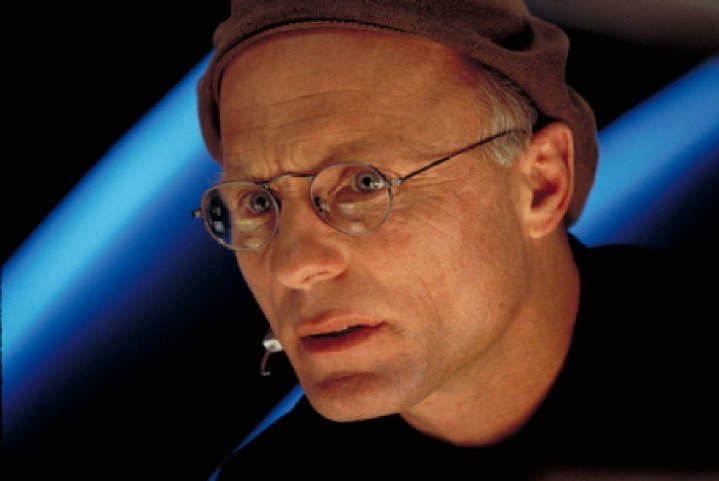
Christof directs and controls every element of the show: time, seasons, weather, events, even the lines the people around Truman speak. He calls Seahaven a paradise on earth and binds Truman’s entire life to it. He plants a trauma about the ocean inside Truman as a child, cutting off any curiosity about what might lie beyond the island. Christof describes Seahaven and The Truman Show this way:
We’ve become bored with watching actors give us phony emotions. We are tired of pyrotechnics and special effects. While the world he inhabits is, in some respects, counterfeit, there’s nothing fake about Truman himself. No scripts, no cue cards. It isn’t always Shakespeare, but it’s genuine. It’s a life.
I have given Truman the chance to lead a normal life. The world, the place you live in, is the sick place. Seahaven is the way the world should be.
The producer and the cast of The Truman Show essentially make this argument: “Seahaven is a bit controlled, yes, but it is a noble and happy world that captures one person’s real life.” It is not far from the kind of argument made by controlling personalities in real life, or by extremely strict parents. The core of that argument is always the same. I, or my group, know the right answer to a happy life, and therefore I should be the one steering someone else’s life toward that happiness.
So is Seahaven really a paradise on earth for Truman? Is he, inside it, living an ordinary but genuinely happy life as a human being?
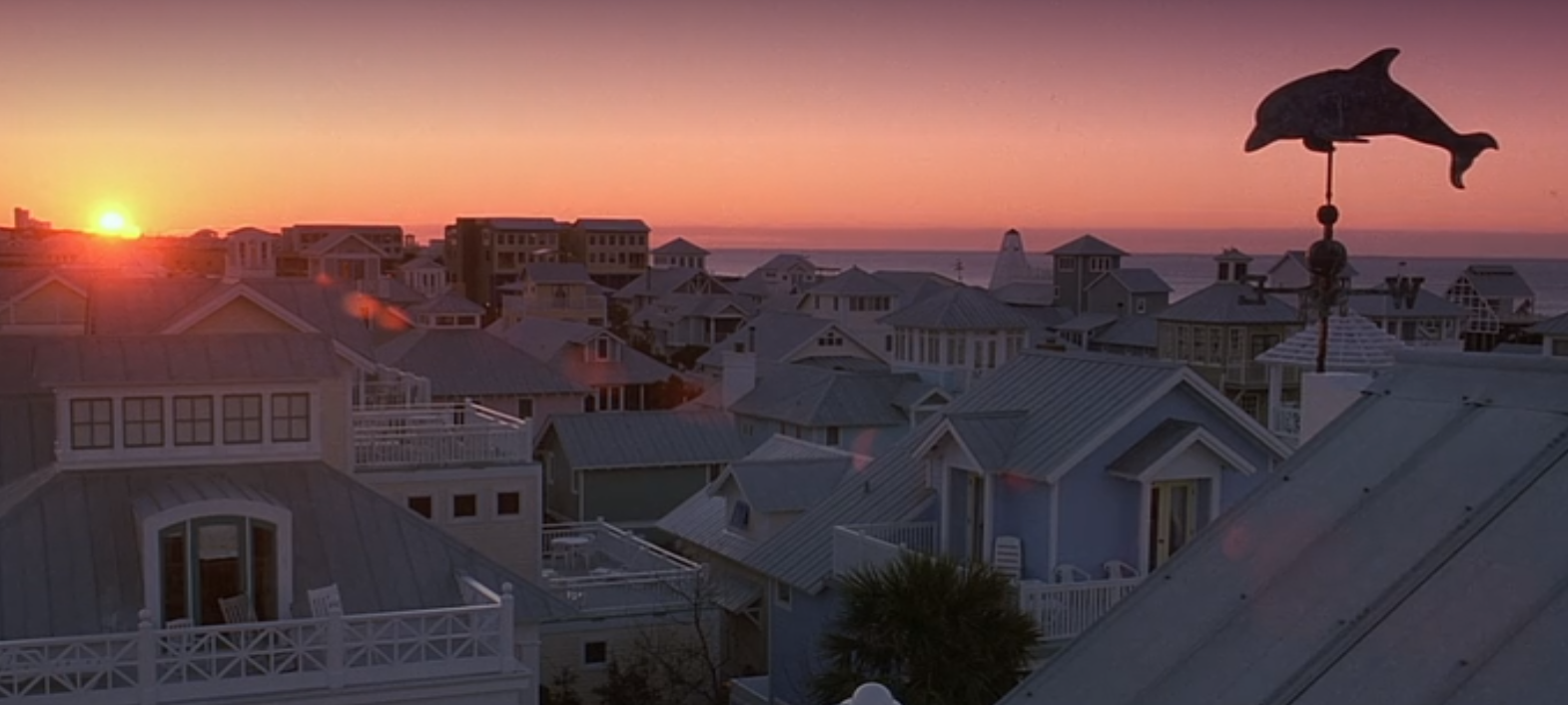
The Truman Show answers that question by exposing how deceptive Seahaven actually is. This nearly perfectly controlled paradise is a place soaked in lies and pretense. It strips Truman of rights he should have as a human being, without his consent. On most days, Seahaven looks peaceful. The moment Truman tries to leave, the contradiction sharpens.
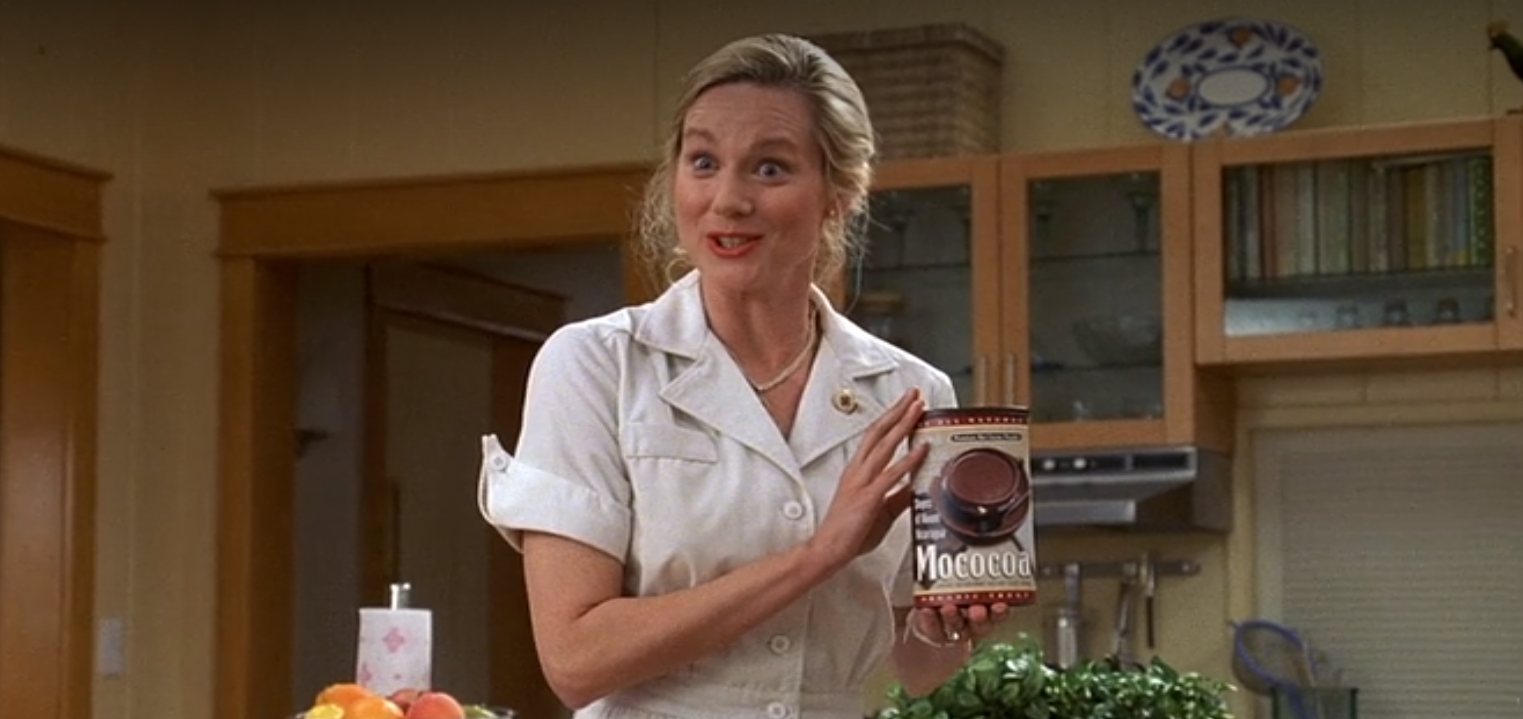
Every joy and sorrow that Truman should be allowed to experience through human relationships is steeped in fabrication, and the people who are supposed to love him act only out of self-interest. The person closest to Truman is his wife. She is, however, simply playing her role. When Truman asks her, in genuine seriousness, why he should have a child with her, she takes the cue from her earpiece and reads out a cocoa product placement instead. The scene plays as comedy for the audience. But when Truman finally erupts and asks what on earth is happening, she points a kitchen knife at him. As the situation escalates, Truman’s friend Marlon shows up, and she runs to him, falling apart and saying she “can’t do this anymore.” Not the actions of a wife who actually loves her husband.
Truman’s best friend Marlon is Christof’s puppet, perhaps the single most important tool for controlling Truman’s life. Nowhere is this more clear than in the scene where he is dispatched to talk Truman out of leaving Seahaven. The heartfelt advice Marlon offers is, line for line, dialogue fed to him by Christof. Even in the quiet moment when the two old friends sit together remembering childhood, the words “I would never lie to you” are not Marlon’s. They come straight from Christof’s headset. The beer cans Marlon brings to share are also product placements.
Truman is denied even the parental love that any person ought to receive. The actor playing Truman’s father resents being killed off so early in the show, not because he is sad to be parted from his on-screen son, but because he is sad to be cut from the production so soon. When Truman disappears and the residents of Seahaven launch a nighttime search, the actress playing Truman’s mother, instead of worrying about her son, complains, “At this rate I’m going to lose my voice!”
Do you remember the cheerful neighbor and his dog from the early scenes, the ones who greeted Truman every morning? The moment Truman goes missing, the same man becomes someone hissing “Get him!” at the same dog, now turned into a snarling search hound.

In Truman’s life, parental love, neighborly kindness, friendship — none of it is real. It is all directed for the sake of ratings. The tears Truman sheds when he is reunited with the father he believed dead are repackaged by the in-show television media as gossip for the show’s viewers. Christof appears, on the surface, to look after Truman with a father’s heart, but his only real goal is the continued ratings and success of The Truman Show.
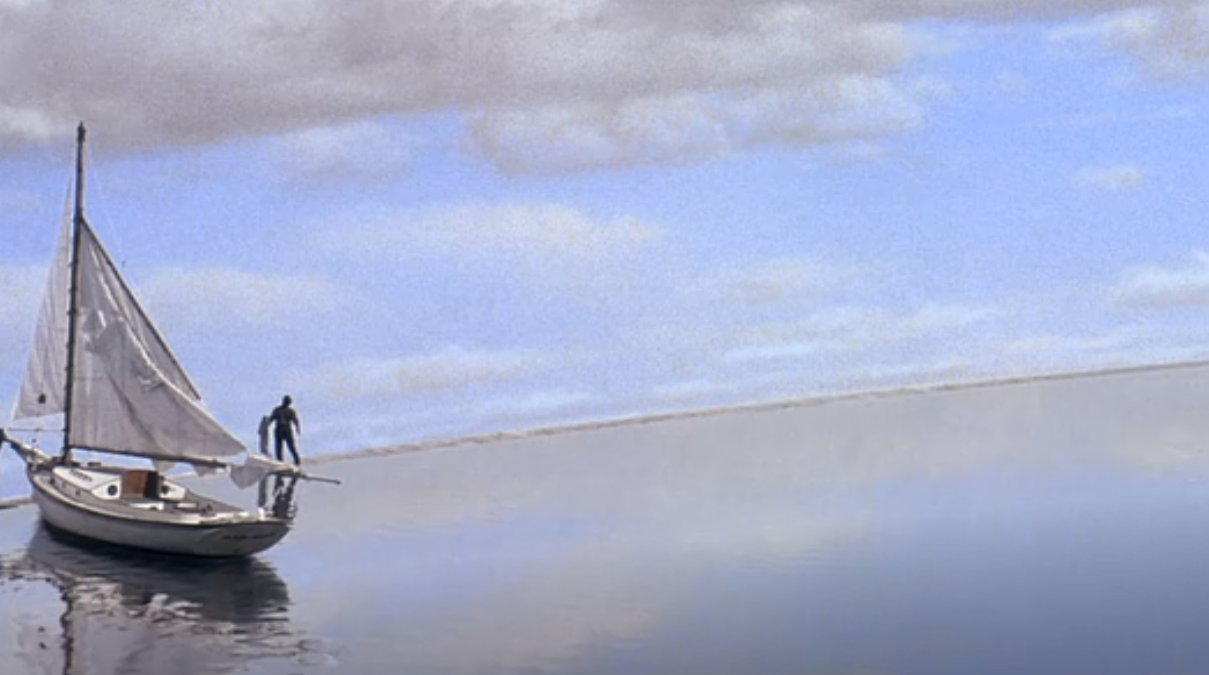
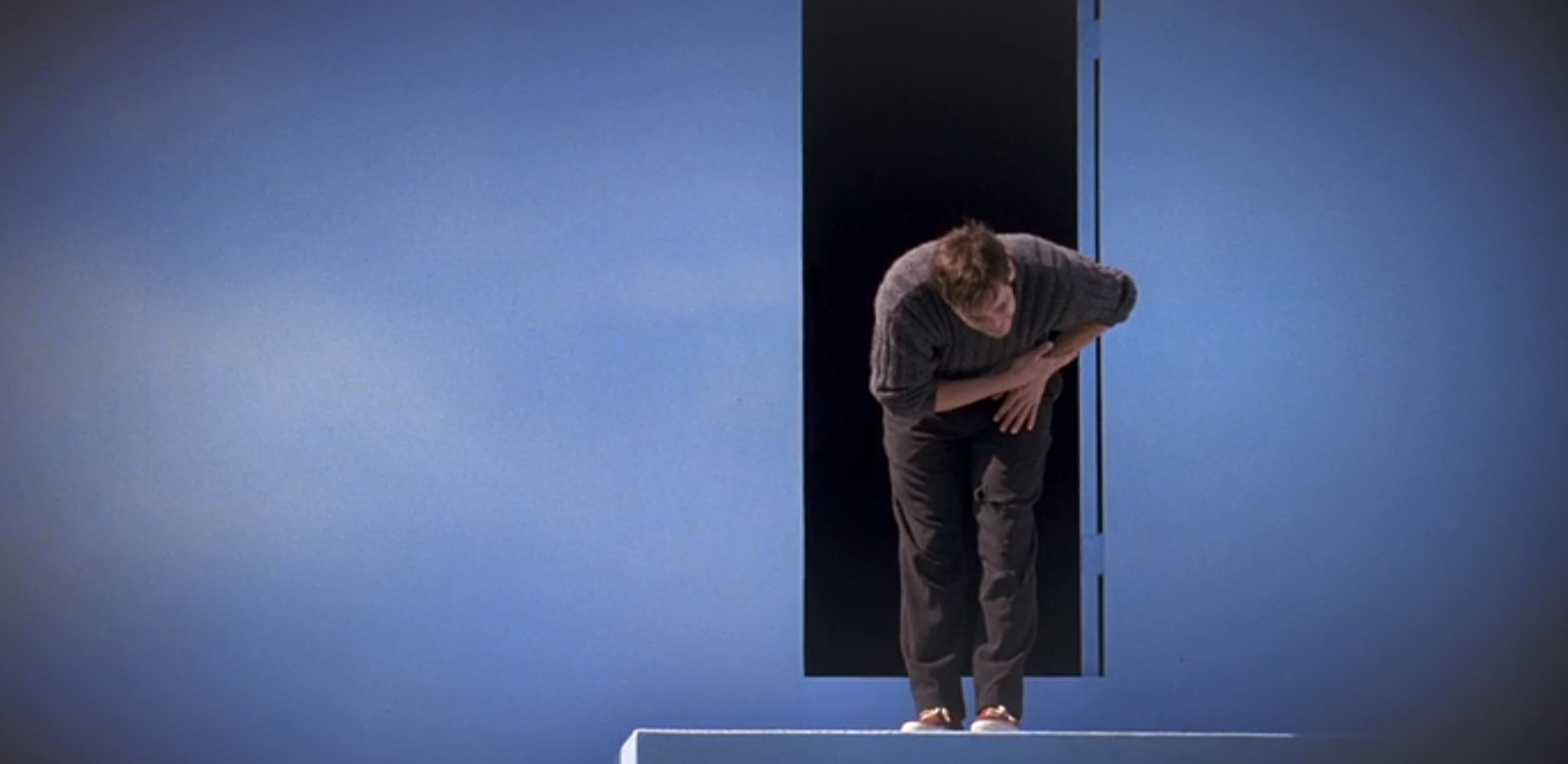
Escaping a fabricated world like this is not easy. Leaving a place you have lived in for decades is something like trying to escape an island. Truman wages a real fight to break out of Seahaven. He shakes off every pursuer and finally faces the water that has been his lifelong trauma. With the trauma, the storm, and the fear of pursuing something whose existence he cannot even confirm, he hands himself over to a small sailboat. Christof, the obsessive controller, conjures a murderous storm to stop him. After all of it, what waits at the very edge of the world is a tall wall. Truman lowers his head, but he steps along it carefully and finds the door.
Just as Truman is about to walk out of Seahaven, Christof speaks to him over a loudspeaker, pleading with him about how happy life inside Seahaven really is. Truman, instead, says goodbye to Christof and to the audience watching at home, and walks out of Seahaven on his own two feet. In that moment, viewers feel an instinctive, enormous catharsis.
Why do we sympathize with Truman’s escape, and why do we feel that catharsis so strongly? His exhausting journey resembles the long human struggle to win freedom out of control and oppression. To enjoy what feels obvious to us today, humanity has had to sacrifice an immense amount along the way. Truman, like our ancestors, faced his trauma, trusted himself to a small boat, pushed through the storm, and at the wall on the other side, found the way out of Seahaven.
In case I don’t see ya, good afternoon, good evening, and good night.
Truman could have chosen to stay. For someone who has just learned the full truth, life inside Seahaven would have remained predictable, controllable, free of worry. Much of the fear we encounter in real life comes from uncertainty, and Seahaven contains very little of that. Truman could, in theory, have lived a deeply comfortable and untroubled life inside it.
But the price of that life is the loss of his humanity. Everything authentic that he ought to be able to experience as a person disappears. Even the love he receives from the show’s viewers is the kind of love that switches off the moment the channel is changed.
The problem with the controlled world that The Truman Show presents is precisely this: the loss of humanity and of love. Control carries the very real possibility of taking away, without consent, a person’s right to choose for themselves and the basic rights they should be able to enjoy. If you find yourself living inside some form of control that quietly strips away things you should be able to have, and if you have grown used to it, then consider doing what Truman did: walk out of Seahaven and reclaim what is yours. Along the way you will have to face your own trauma, your own fear, and your own Christof. But on the far side of all that, what you will find is a real world, and a real version of yourself.